


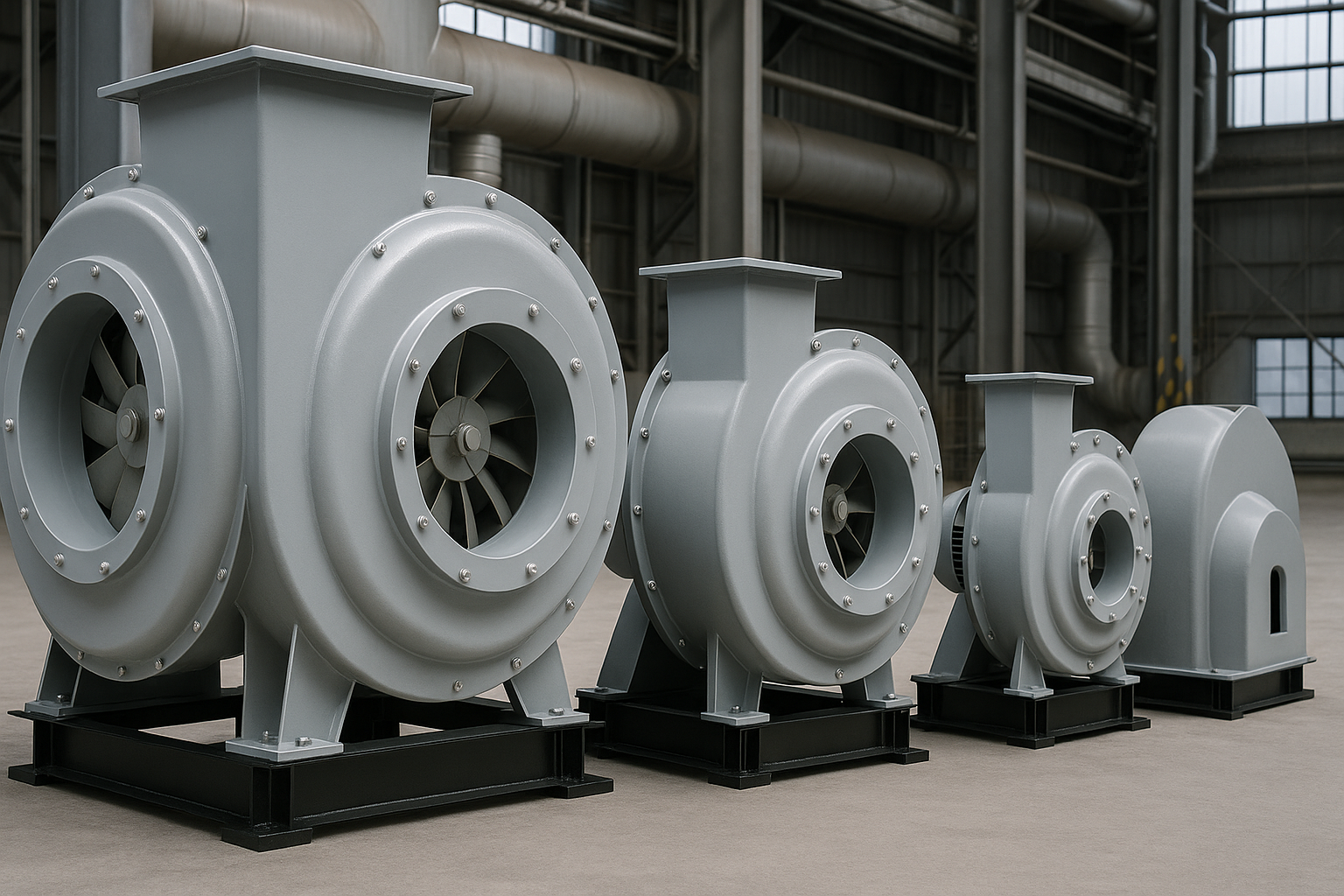
High-Performance, Corrosion-Resistant Industrial Air Blowers
Reconsky Fiber Glass Pvt. Ltd. offers top-of-the-line FRP (Fiberglass Reinforced Plastic) Blowers engineered for demanding industrial applications requiring reliable air movement, ventilation, and fume extraction in corrosive and harsh environments. Manufactured using corrosion-proof polypropylene reinforced with fiberglass, our blowers deliver superior efficiency, durability, and operational safety.
What Are FRP Blowers?
FRP Blowers are specialized mechanical fans designed to move air or gases efficiently. Constructed from lightweight polypropylene combined with fiberglass reinforcement, these blowers offer excellent resistance to acids, alkalis, and aggressive chemicals commonly encountered in chemical plants, wastewater treatment facilities, and industrial processes.
Reconsky FRP blowers are available in both centrifugal and axial configurations, allowing optimal selection based on airflow and pressure requirements.
Key Features & Benefits
Superior Corrosion Resistance
PP-FRP composite construction resists chemical attack, corrosion, and wear, ensuring long service life in hostile environments.
Wide Operating Temperature Range
Designed to operate reliably from -20°C to +80°C, supporting diverse industrial processes.
Centrifugal & Axial Designs
Available in centrifugal types for higher pressure and axial types for higher airflow applications.
Electric Motor Driven
Powered by robust electric motors with optional variable speed control, tailored to blower size and duty.
Flexible Mounting Options
Can be floor-mounted, wall-mounted, or roof-mounted to suit plant layout and space constraints.
Low Noise & Vibration
Dynamically balanced impellers and optimized design ensure smooth, quiet operation.
Enhanced Safety
Options for spark-resistant construction, explosion-proof motors, and overload protection for hazardous areas.
Low Maintenance
Corrosion-proof materials and robust construction reduce maintenance and downtime.
Technical Specifications
- RPM: Typically 1000–1500 RPM (model dependent)
- Airflow Capacity: Customized to application requirements
- Pressure Capability: Medium to high pressure as per process demand
- Material: Polypropylene with glass fiber reinforcement (PP-FRP)
- Power Supply: Electric motor, generally 3-phase (voltage configurable)
- Blade Design: Axial or centrifugal impellers
- Safety: Designed to meet industry safety standards for chemical environments
Typical Applications
- Chemical plant exhaust and ventilation systems
- Fume extraction in pharmaceutical manufacturing
- Metal finishing and electroplating exhaust
- Wastewater treatment and odor control
- Food and beverage processing ventilation
- Industrial HVAC systems requiring corrosion resistance
Why Choose Reconsky FRP Blowers?
With decades of experience in corrosive air handling solutions, Reconsky delivers application-optimized FRP blowers backed by customized engineering, international compliance, responsive after-sales support, and cost-effective alternatives to conventional metal blowers.
Frequently asked questions
An FRP blower is an industrial exhaust fan in which the casing, scroll, and wetted parts are manufactured from fiberglass reinforced plastic, specifically engineered to handle corrosive gases and fumes. Unlike MS blowers, FRP blowers do not corrode in acidic, saline, or chemical-laden atmospheres and therefore do not require internal coating or frequent repainting. Compared to PVC blowers, FRP offers much higher mechanical strength, better temperature resistance, and improved durability under vibration and continuous-duty industrial service. This makes FRP blowers ideal for chemical plants, ETPs, pickling lines, fertiliser units, and coastal facilities, especially across Gujarat’s harsh industrial environments.
FRP blowers are available in a wide capacity range, from a few hundred m3/hr for laboratory or local exhaust systems up to tens of thousands of m3/hr for large scrubbers and process exhaust applications. Static pressure ratings are engineered to suit ducting, scrubber pressure drops, and filtration systems, covering low to medium-high pressure duties. Centrifugal FRP blowers with forward- or backward-curved impellers are most common, while axial FRP blowers can be supplied for special ventilation requirements. Units are offered in direct-drive or belt-drive configurations with horizontal or vertical discharge options for layout flexibility.
FRP blowers use carefully selected resin systems and laminate designs compatible with corrosive exhaust gases such as acid fumes, alkali vapours, and chemically laden moist air. The composite casing resists chemical permeation and attack, preventing thinning, pitting, or leakage over time. Standard FRP constructions handle typical fume temperatures downstream of scrubbers or extraction hoods, with higher-temperature designs available using specialised resins. Non-metallic internal surfaces also prevent rust and scale formation, ensuring stable airflow, lower vibration, and consistent performance over long operating periods.
Reliable FRP blowers are built with aerodynamically designed, dynamically balanced impellers to minimise vibration and noise. The FRP casing and structural supports are engineered with sufficient stiffness to resist deformation under pressure and mechanical loads. Proper sealing and protection of metallic components such as shafts, bearings, and fasteners prevent exposure to corrosive gases. Quality manufacturers perform alignment checks, trial runs, and vibration measurements before dispatch, ensuring smooth and stable operation in continuous-duty service.
FRP blowers significantly reduce lifecycle cost by eliminating corrosion-related casing replacement, recoating, and frequent repairs common with steel blowers. Their long service life and low maintenance needs result in fewer shutdowns and lower spare parts costs. Consistent and reliable airflow helps plants maintain emission compliance, control odours, and protect personnel from hazardous fumes. For chemical and ETP plants across Gujarat and India, FRP blowers support easier regulatory compliance, improved safety, and long-term operational reliability, especially when integrated with FRP scrubbers and ducting systems.