


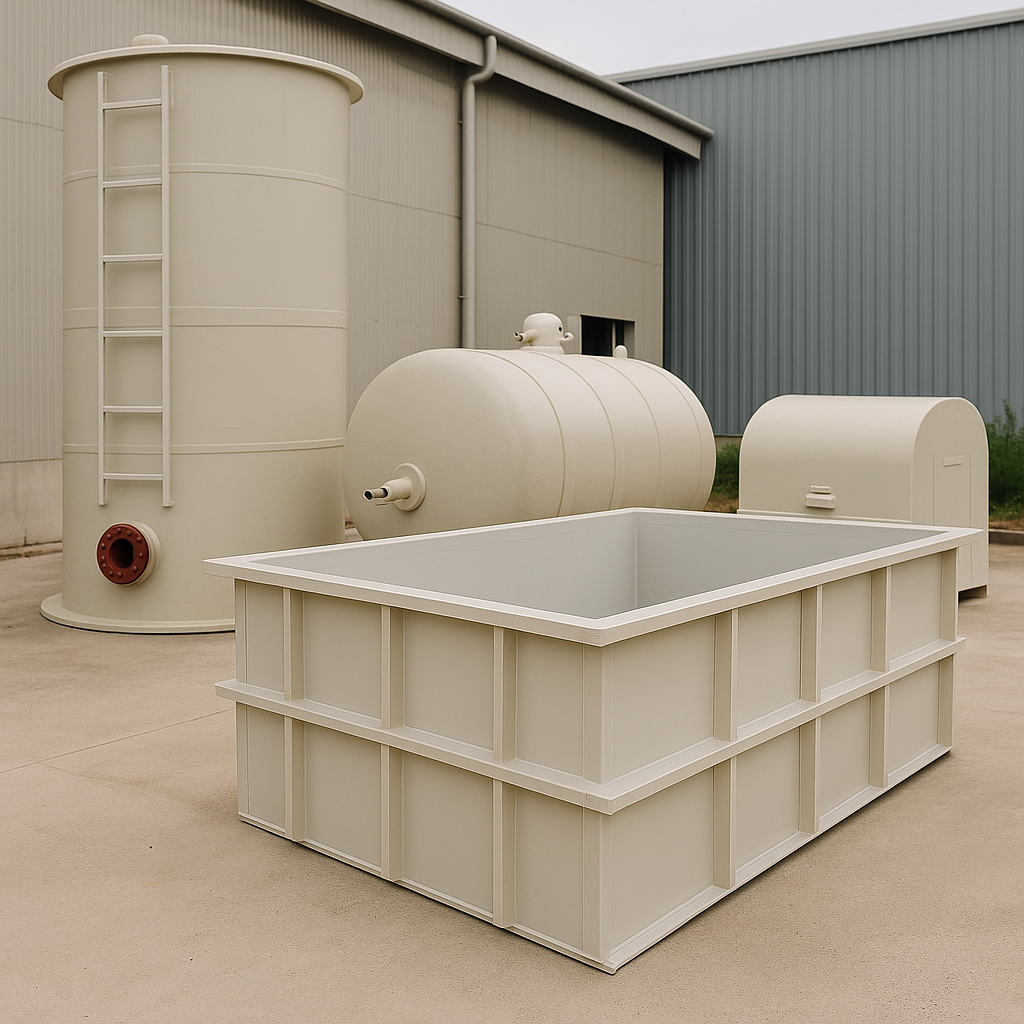
Advanced, Corrosion-Resistant Air Pollution Control Systems for Industrial Emissions
Reconsky Fiber Glass Pvt. Ltd. offers premium HDPE Scrubbers designed for highly efficient removal of pollutants, dust, fumes, and harmful gases from industrial exhaust streams. Manufactured using virgin-grade High-Density Polyethylene (HDPE), our scrubbers combine robust corrosion resistance with lightweight construction for long-lasting, low-maintenance, and eco-friendly air pollution control.
What Are HDPE Scrubbers?
HDPE scrubbers are specialized air pollution control devices made from chemically inert, corrosion-resistant HDPE. They clean industrial exhaust air by removing acidic gases, particulates, and volatile organic compounds via wet, dry, or biological scrubbing methods. Components include scrubbing vessels, fans, ductwork, mist eliminators, and pumping systems, all designed for maximum efficiency and durability.
Types of HDPE Scrubbers
- Wet Scrubbers: Use water or chemical solutions to dissolve and neutralize pollutants.
- Dry Scrubbers: Employ solid adsorbents to capture harmful compounds from gas streams.
- Biological Scrubbers: Utilize bio-media to biodegrade odorous and hazardous substances.
Features & Benefits
Superior Corrosion Resistance
Withstands wide pH ranges and aggressive chemical attack, ensuring long service life.
High Strength & Durability
Engineered for structural integrity under demanding industrial conditions.
Lightweight & Easy Installation
Simplifies transport and installation, reducing project timelines and labor costs.
Leak-Proof Construction
Advanced German welding technology ensures seamless and durable joints.
Environmental Compliance
Designed to meet and exceed air quality and pollution control standards.
Low Lifecycle Cost
Reduces maintenance, extends service intervals, and lowers operational expenses.
Flexible Design
Custom configurations available for plant-specific requirements.
ISO 9001:2015 Certified
Assures quality management, product performance, and reliable operation.
Eco-Friendly Operation
Facilitates cleaner industrial air emissions and supports sustainable compliance.
Applications
- Chemical processing and manufacturing plants
- Petroleum refineries and petrochemical industries
- Food processing units
- Metal finishing and electroplating workshops
- Pharma production and biochemical plants
- Wastewater treatment and odor control
- Utility boilers and foundries
Technical Specifications Overview
- Material: Virgin-grade HDPE with glass fiber reinforcement
- Pollution Removal: Up to 99% efficiency
- Airflow Capacity: Variable per client specifications
- Operating Temperature: Typically -40°C to +80°C
- Structure: Leak-proof welded joints
- Standards: ISO 9001:2015, CE certified
- Available Models: Wet, Dry, Biological types
Why Choose Reconsky HDPE Scrubbers?
- Over 20 years of expert manufacturing and innovation
- Custom-engineered pollution control systems tailored to client needs
- Comprehensive technical and after-sales support for smooth operation
- Certified quality aligned with international environmental guidelines
- Proven, cost-effective solutions lowering environmental risks and compliance costs
Frequently asked questions
An HDPE scrubber is an air pollution control unit whose shell and wetted parts are made from high-density polyethylene, engineered to absorb and neutralise corrosive gases, fumes, and particulates from industrial exhaust streams. Unlike MS scrubbers, HDPE units are inherently corrosion-proof in the presence of many acids, alkalis, and saline or chemically laden moisture, eliminating the need for internal rubber lining or frequent repainting. Compared with FRP scrubbers, HDPE is especially attractive where strong chemical resistance at moderate temperatures, impact toughness, and field weldability are priorities. HDPE scrubbers are widely used for ETP exhausts, chemical handling areas, odour control systems, and certain process vents within HDPE design limits. For medium-duty fume extraction and odour control in Gujarat’s chemical and ETP clusters, HDPE scrubbers offer a cost-effective, low-maintenance solution.
HDPE scrubbers are suitable for treating acid and alkali fumes such as HCl, H₂S, SO₂, NH₃, and odorous compounds from wastewater and sludge handling areas, within the chemical resistance limits of HDPE. Typical applications include ETP/STP vents, chemical dosing rooms, sludge dewatering areas, and smaller process or storage tank vents. Their chemical resistance makes them ideal for odour control and low-to-medium load gas treatment duties. When integrated with PP FRP or FRP components like blowers or ducting, HDPE scrubbers form part of a complete corrosion-resistant exhaust system, providing robust performance, simple construction, and field-repairable units.
HDPE scrubbers are typically fabricated as vertical packed-bed towers or horizontal units, depending on height, footprint, and duct routing constraints. Shells are made from HDPE sheets or spiral-wound HDPE, with internal packing, spray headers, demisters, and distribution systems optimised for maximum gas-liquid contact. They can be single-stage, two-stage, or multi-stage for multi-pollutant or stringent outlet requirements. Design parameters—such as gas flow (CMH), liquid recirculation rate, packing depth, and nozzle layout—are chosen to ensure high removal efficiency while keeping pressure drop manageable. Accessories may include HDPE/PP tanks, recirculation pumps, instrumentation ports, sampling points, and access manholes to aid operation and maintenance.
Properly designed HDPE scrubbers reduce emissions of acid gases and odorous compounds to within CPCB and GPCB stack limits. They maintain high removal efficiency over time due to corrosion resistance, minimising risk of non-compliance during stack monitoring or third-party audits. Odour control improves workplace conditions and reduces nuisance to surrounding communities, supporting ESG reporting and social license to operate. As part of an integrated exhaust treatment system, HDPE scrubbers enable plants in Gujarat to demonstrate responsible environmental management to regulators, customers, and investors.
HDPE scrubbers provide long service life because the shell does not corrode, blister, or delaminate under normal operation. Maintenance is limited to cleaning pumps, nozzles, packing, and demisters, rather than structural repair or recoating. Lightweight construction reduces support steel, lifting requirements, and installation time compared with heavy MS units. Reduced corrosion failures and stable emission control lower OPEX and minimize production interruptions. Sourcing HDPE scrubbers from an experienced composite fabricator ensures proper chemical selection, sound welding, and local after-sales support, enhancing both technical reliability and commercial value for plants in Gujarat.